Israel Mulls Settler Freeze
http://momentmagazine.wordpress.com/2010/11/17/israel-mulls-settler-freeze/
Wednesday, November 17, 2010


Friday, November 12, 2010
New Moment Magazine Blog Post!
The Limits of Political Protest
http://momentmagazine.wordpress.com/2010/11/11/the-limits-of-political-protest/
http://momentmagazine.wordpress.com/2010/11/11/the-limits-of-political-protest/
Monday, November 8, 2010
Empty Chair Syndrome
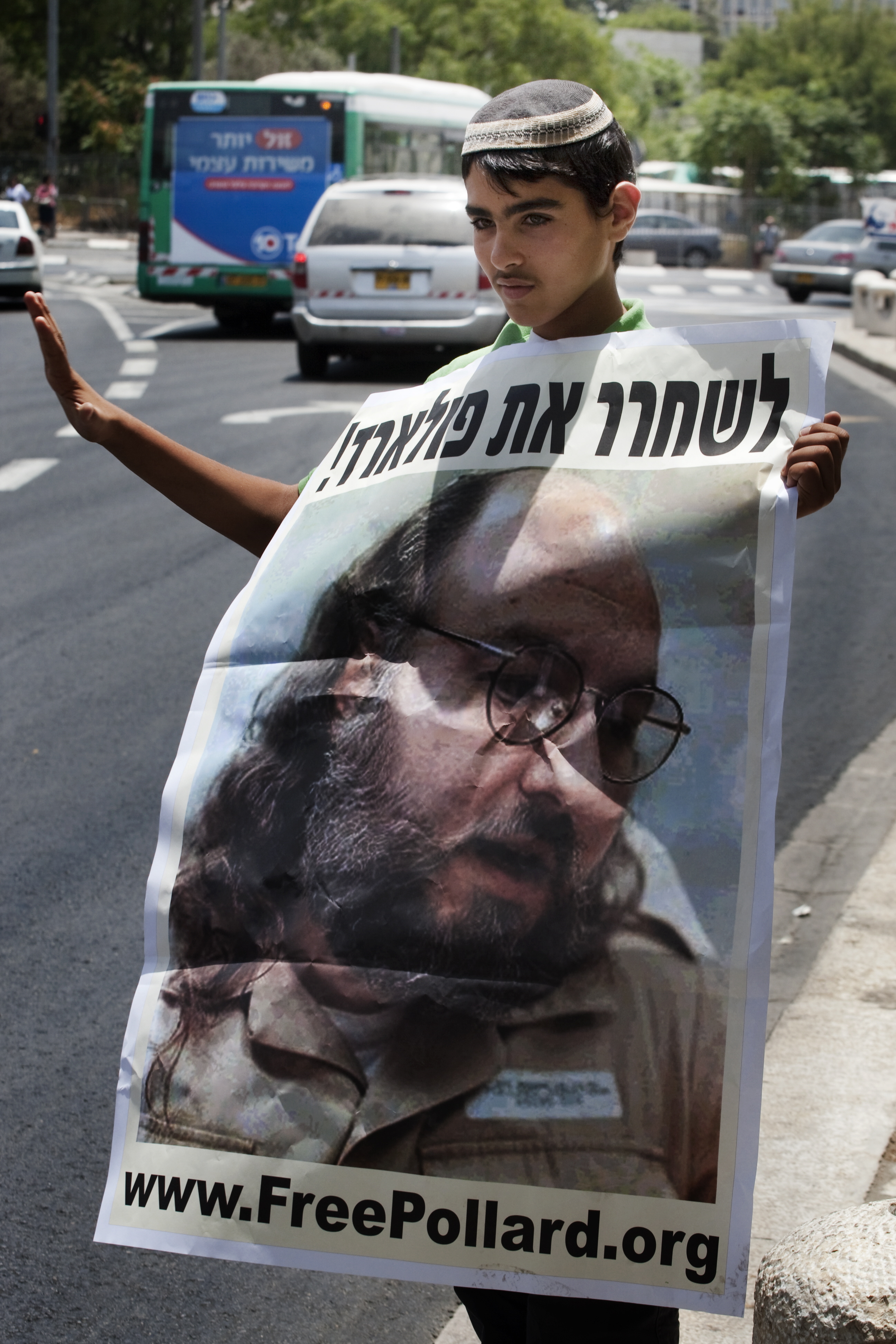
 In America his face is hidden deep in the bowels of a high security prison. In Israel his face greets you as you enter Jerusalem. Jonathan Pollard remains not only locked away from his friends and family in a U.S. prison, but from the Jewish American subconscious as well.
In Israel “he is still alive” is a motto of optimism and urgency. In America it is an actual and sadly necessary reminder of his tragic situation. Gilad Shalit is the face that stares at Israelis from every bus, billboard, and newspaper but is as ubiquitous as a pager in America.
Pollard is sitting in an American prison, serving out a, some say incongruous, sentence of life in prison for being convicted of espionage on behalf of Israel (recently the deputy of the American Defense Secretary that helped incriminate Pollard has acknowledged that Pollard has been given a disproportionate punishment).
Shalit has been held captive by Hamas since his abduction in 2006. Hamas has all but refused to release any information as to Shalit’s condition and has repeatedly balked at negotiations for his return.
While Pollard and Shalit are two very distinct issues, each with its own complexities and opinions, they are both inextricably linked as the faces of the current Israeli political and cultural narrative. Not so in America.
While the world is no stranger to Jewish American apathy, indifference to their suffering brothers is no longer the gravest cause for concern. Apathy has given way to ignorance. The utter lack of dialogue on issues such as Pollard and Shalit in America is the American Jewish Establishment’s most alarming miscue. Many American Jews may feel torn between their allegiance to Israel and America over Pollard, but to erase it from the narrative altogether is far from the answer. The always maddening debate over whom and what would be acceptable to trade to bring Shalit home can bring the closets of friends to blows, but never should it be swept under the rug. No sane person would argue that Israeli society has reached a consensus on either Pollard or Shalit, however it is in dealing with these sticky issues that Israeli society truly distinguishes itself as a pluralistic and democratic entity in a region where such values are sparse. Jewish Americans are being trained to involve themselves in every human rights cause there is…that is except for the trials of their own people. The dismissal of Jewish issues such as Pollard and Shalit can only breed disregard and ignorance, two things no community is in demand of.
The solution to this daunting predicament is for Jewish American groups to adopt the Israeli mindset in relation to Pollard and Shalit. Israeli culture suffers/benefits from “empty chair syndrome”, the incessant awareness that there is a person missing when sitting down to the proverbial family feast. This cognizance of vacancy then leads to a discussion in every mini-mart, taxi cab, and Shabbat table in the country. American Jewry is suffering from “crisis at the neighbor’s house” syndrome. Instead of making sure their own house is in order, they jump up from the table to fight their neighbors’ fights first. No attempts are made to solve the problem of the glaring empty chair. It must be asked: how can you run out to save your neighbor when an empty chair blocks your front door?
“Empty chair syndrome” is not a new concept in Judaism. During the Passover Seder we fill a cup for Elijah the Prophet, as well as open the door for him, in the hopes that he arrive and lead us to salvation. During the Succot holiday we invite different Biblical icons into our Succot. Their lack of physical attendance serves as our motivation to analyze our lives in the hopes of living more righteously the rest of the year. Israel has adapted this concept for Pollard and Shalit and American Jewry must do the same.
Hopefully, the Jewish American community can transform themselves into a community that confronts the issues of its own people first and foremost. While fighting against injustice in Darfur and women’s rights in Iran has true altruistic merit, Jews must first grapple with their own affairs if they hope to survive long enough to help the rest of the world. Hopefully, the American Jewish Establishment can right the ship so that they can move the empty chair away from the front door and be able to open it for Pollard, Shalit, and the rest of their stranded brethren when they come home to reclaim their seats at the table.
1st Moment Magazine Blog Article!!!
ObamaCare Turns the Tables on the Jewish Mothers
http://momentmagazine.wordpress.com/2010/10/28/obamacare-turns-the-tables-on-the-jewish-mothers/
http://momentmagazine.wordpress.com/2010/10/28/obamacare-turns-the-tables-on-the-jewish-mothers/
Thursday, September 16, 2010

Monday, September 6, 2010
Talks Stall Over Frozen Yogurt Demand

This sticking point is certainly not immune to the plethora of cynicism that has surrounded these talks since the beginning. Palestinian chief negotiator Saeb Erekat has expressed his hesitations due to the probability that the Israelis “would promise a full assortment of yogurt flavors, but most likely only provide tart flavors. I know that tart is the popular choice in health-conscience Hollywood, but what about the children. Nothing would make Israel happier than watching our poor kids running around in the streets, toasting yet another successful suicide attack with some delicious froyo, quickly relegated to puckered faces and watering eyes. They are a cruel people to be sure”. On the Israeli side, Defense Minister Ehud Barak was pessimistic about “the current infrastructure in the Palestinian Authorities being conducive to responsible toppings choices. The system currently in place could lead to catastrophes as large as mango and M&M’s topped Strawberry Tart”. Barak then proceeded to throw up a little bit in his mouth.
United States Secretary of State Hillary Clinton had stipulated that if the PLOGurt chain was to be established, the U.S. would join Israel in a joint-exercise that would aim to educate the Palestinian people on the benefits and pitfalls of the self-serve yogurt shop system.
Right-wing activists in Israel have pleaded in an open letter to Israeli Prime Minister Bibi Netanyahu, “not to be tricked into merely trading one freeze (the soon-ending 10 month freeze on building in the settlements) for another. If you concede now, next they will ask for our secret way to get rid of brain-freeze quickly. You must say here and now, no more freeze of any kind”.
Israeli Foreign Minister Avigdor Lieberman, an outspoken critic of the current talks being conducted by his own government, was again protesting against the Prime Minister Sunday night, preaching to a crowd of his constituents, “that the only positive effect establishing PLOGurt in Gaza could have is showing the world that the only thing Palestinians have less tolerance for than lactose is the Jewish State”.
Many in academia have credited this seemingly one-sided skepticism for the PLOGurt peace initiative on the Palestinian’s history of balking on large gestures made by the Israelis. Bar-Ilan Political Science Professor Ayal Brandiess told E-Tone that, “Israel cannot afford to look foolish with this yogurt request since they were caught with the pants down when PLO Chairman Yasser Arafat walked away from an offer to open 40 Wetzel’s Pretzel stores in the West Bank, Gaza, and East Jerusalem in 2000”.
Saturday, September 4, 2010
Building is Forever
 [Disclaimer: Not Satire]
As a yeshiva student living in the old city of Jerusalem, I hated it. At the end of 2006 the decision was made to rebuild the Hurva Synagogue, the historic place of prayer at the heart of the Jewish Quarter of the Old City, destroyed by the Arab Legion during the War of Independence. The six a.m. drilling I awoke to every morning notwithstanding, I struggled to understand the reason for rebuilding. There was still a small synagogue inside the ruins where many still prayed. Additionally, I had always figured that the fact that it was ruins was a large part of its tourist appeal. And come on, 6 a.m.! Construction continued throughout my year and a half in yeshiva and I left seeing little progress in the rebuilding.
This summer I was a councilor for American high school kids spending six weeks in Israel. On the first day we took the kids to the Old City, and as we walked past the now monstrous, lavish, rebuilt Hurva, I quickly mentioned the story of the structure to my campers but lacking much enthusiasm. I still struggled to understand the symbolism of the restoration.
On the Ninth of Av, the day of mourning for the destruction of the Temple, we took the campers to one of my co-councilor’s yeshiva in East Jerusalem. From the hill the yeshiva was perched upon you could see the entire Old City. As I pointed out the different familiar icons from this new perspective to the kids, I was momentarily puzzled as I reached the new Hurva. I was not used to seeing a gigantic domed structure in the Jewish Quarter. Suddenly, I was hit with the understanding of the significance of the new Hurva. It dawned upon me, on that day of mourning, that in the aftermath of destruction Jews build.
Often times a society will react to destruction with retaliatory wrecking, such as the 1992 Rodney King Riots in Los Angeles. The Jewish people have always had the opposite impulse. Spiritually staggering in the desert, the Jews built the Tabernacle to bring G-d’s presence closer. From the ashes of the Holocaust, the Jews built up the previously desolate lands of Palestine. Retaliation by building sends a clear and strong message. No matter what you do to us, we are here forever. An establishment is the establishment of the people who built it, in the place they built it.
The four Israelis that were brutally slaughtered in the Hills of Hebron Tuesday lived a life that exhibited this message of eternal existence. They forwent a quiet and safe life to show just how important it was for the Jewish people to establish themselves in every corner of the land G-d gave us. Hamas stands for destruction but history shows that often times the merchants of destruction inevitably becomes its primary recipient. The four holy souls that were cut down in cold blood built their lives in Hebron, in response to all the destruction that has taken place there throughout history. The city is holy and of utmost importance to the Jewish people, and thus, building there is imperative, no matter the risks. It is essential to ensuring that the world know the Jews will be there forever.
Additionally, in response to the shameless slayings, the Yesha Council, the Jewish governing body in the West Bank decreed a de-facto end to the building moratorium, and announced that after the burial of the terror victims, a “construction party” of sorts was to commence. Their response to murder was not bullets and bombs but hammer and nail. They too understood that the best way to honor the fallen was to continue the underlying message of their lives.
The juxtaposition of this phenomenon to the Arabs would be comical if it did not have such terrifying consequences for Israel. The Friday edition of the Los Angeles Times featured a front page story warning that “Jewish and Palestinian extremists make [Hebron] a hot spot that might sink peace talks”. The article then elaborated on who these Jewish and Palestinian extremists are. On the Palestinian side was the acknowledgment that, “Hamas…renewed its campaign of violence this week with two drive-by shootings”. The Jewish extremists were then described as, “Jewish settlers,” that, “demonstrated their contempt…by rolling out bulldozers and cement mixers to resume construction in defiance of Israel’s 10-month moratorium”. Whether or not you agree with building in the settlements and the defiance of the Israel government (which seems like a pastime bestowed upon all Israelis, left, center, or right, at one point or another), it is impossible to miss the drastic discrepancy between the extremism of Hamas violence and the “extremism” of Jewish construction.
Should Bibi Netanyahu walk away from the charade of peace negotiations currently playing out in Washington? Absolutely. These most recent attacks only re-enforce the point that even if one was gullible enough to believe PA President Mahmoud Abbas wanted to stop the murder of Jews in Israel he has absolutely no authority over the increasingly powerful Hamas regime in the West Bank. Additionally, it is clear that United States President Barak Obama has little, if any, faith in these talks. Noticeably, the State Department has taken the reigns as the American representative in the negotiations. This has placed Secretary of State, and Obama’s number one inter-party rival, Hillary Clinton, in the direct spotlight for as long as these talks proceed. With a pivotal November mid-term election upcoming and an even more vital Presidential election looming, if President Obama had even a modicum of hope that these talks would be successful he would never allow for Hillary to lay claim to the credit. The White House’s decision to distance themselves from the talks demonstrates how cynically the Obama Administration views the negotiations. Bibi’s insistence in staying the course with these pseudo-negotiations, while needlessly endangering Israelis, does not endanger the Jewish people however. No matter the damage Bibi, Abbas, or Obama inflicts on Israel, the people will respond with building.
I recently saw a very thought-provoking question in regard to upcoming Rosh Hashanah Holiday, the Jewish New Year and Day of Judgment. It began by observing that most people, when faced with a day of judgment, wear conservative clothing and eat modestly, nervous over the outcome of the judgment. Thus it wondered why on Rosh Hashanah, a day where each and every Jew is judged, do the people wear fancy new clothing and stuff themselves with elegant meals surrounded by friends and family? Shouldn’t they be more concerned?
The answer given was that while as individuals, we worry about our lots for the upcoming year, G-d chose us as his people, and we know, no matter what happens, the Jewish people will be on this earth forever. Thus, while as individuals we may be worried, as a community and as a nation we hold an annual celebration of this eternal decree of existence.
This is the message of the Rosh Hashanah celebration, the message of the Hurva, and the legacy of the four holy souls of the Hebron Hills. The Jewish people will be in their land until the end of time (and beyond). We must never abandon this truth. In recognizing this reality we take the senseless murder of four innocent souls and build something positive from it. We must honor their memory by continuing to build our communities, our families, and our belief that the Jewish people, come hell or high water (or nuclear warheads), will always be established in this world. Forever.
Subscribe to:
Posts (Atom)